
Hair removal gets all the attention, but the most dramatic skin changes I produce with a laser come from CO2 resurfacing. We run two very different versions of it — and choosing between them is mostly a conversation about your calendar, not your skin.
The comfortable one: CoolPeel
CO2 laser skin resurfacing on our Tetra CoolPeel platform is the light-touch version: about thirty minutes, and roughly two to five days of social downtime — pink, then done. It shines on fine lines around the eyes, mouth, and forehead, and shallow acne scars. It’s the resurfacing you can schedule around a normal life.
Honesty section, because I always have one: CoolPeel is not the tool for deep creases, significant sagging, stretch marks, or active acne — and on very deep skin tones the hyperpigmentation risk means I’ll often steer us to a different plan entirely. If that’s you, I’d rather tell you in a consult than let a laser overpromise.
The deep one: CO2RE fractional
CO2 fractional on the CO2RE is the heavy-lift: thirty to sixty minutes, typically a single session, and a real recovery — five to fourteen days while the skin peels and rebuilds. In exchange you get the deepest results a laser offers on age spots, etched lines, scarring, uneven tone, and laxity. One session, one committed recovery window, months of payoff.
Why fall is laser season here
Fresh-lasered skin and Arizona sun are a terrible couple. Resurfaced skin must stay out of direct sun while it heals, which is why the deep fractional is a fall-and-winter treatment on my calendar — and why the patients who get the best results are the ones planning in July, not walking in sunburned in September. (The same sun logic applies to hair removal, by the way — it’s rule number three.)
How I choose in the consult
Light texture work and a busy calendar → CoolPeel, almost any time of year with sun discipline. Deep, structural change → CO2RE fractional, booked for the cooler months. Some patients ladder it: a CoolPeel now to take the edge off, the deep session after the holidays.
What a CO2 laser changes that skincare can’t
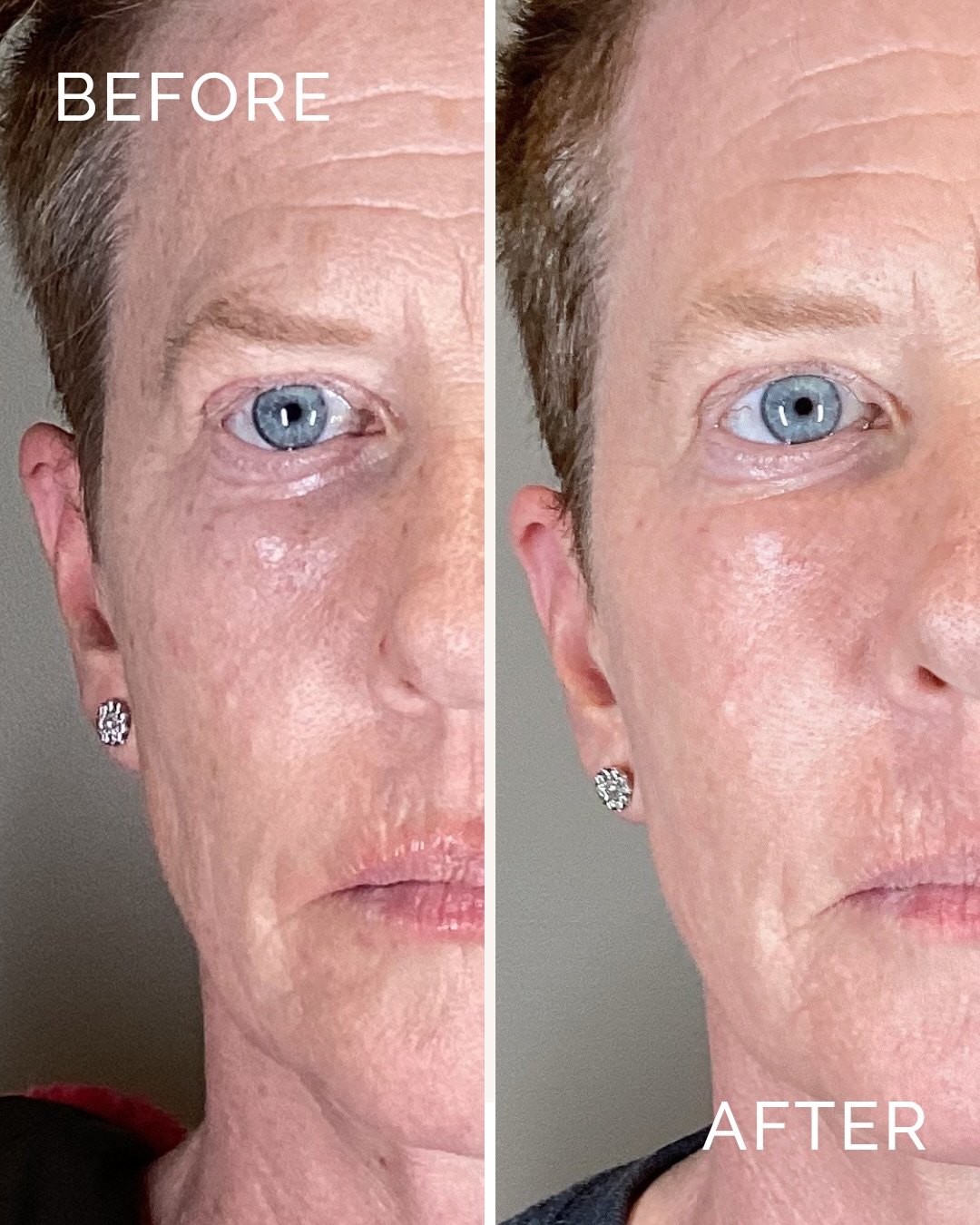
The before-and-after at the top of this post went up on our Instagram in June with the line “this is CO2 laser resurfacing doing what skincare alone can’t.” Here is what I mean by that, without the caption shorthand. A CO2 laser doesn’t sit on top of your skin the way a product does. It removes skin — a measured superficial layer with CoolPeel, thin columns with the CO2RE — and the change you see is the skin that heals in its place. That is also why this treatment comes with a consult, a prep sheet and a recovery window, and a moisturizer doesn’t.
The caption ended on a question — curious if your skin is a candidate? — and it’s the first of three worth answering before anyone books a laser with me in Chandler. They’re the same three whether you’re coming from down Alma School Rd, from Ocotillo, or from the rest of south Chandler. If you’d rather ask them in person, book a consult on our Square booking page and I’ll look at your skin, not a photo of someone else’s.
Am I a good candidate for CO2 laser resurfacing?
Usually yes, if what bothers you is in the skin itself: fine lines around the eyes, mouth or forehead, shallow acne scars, age spots, uneven tone, rough texture. Those are the things our two CO2 lasers are built for. Usually no, or not with this tool, if you have active acne, a very deep skin tone, deep creases, significant sagging or stretch marks. On deeper skin tones the risk of healing with darker patches is real, and a different treatment is often the better plan. Some answers change the plan rather than the verdict: tell me about Accutane, aspirin or blood thinners, diabetes, and any history of cold sores, because each of those can affect the outcome. All of that gets worked through at a consult before treatment.
How do I prepare for CO2 laser resurfacing?
You get a written prep sheet from us, and this is the short version. For the four weeks before: no tanning and no extra sun, a broad-spectrum sunscreen every day, and no deep peels, dermabrasion or other laser resurfacing. Tell me if you take doxycycline or minocycline, because photosensitive medications are stopped 72 hours before treatment. Tell me if you have ever had cold sores or shingles in the area being treated, because an antiviral is started two days before and continued for three days after. Some patients are asked to use a topical retinoid for four weeks beforehand to prime the skin, and if you smoke, stopping for two weeks before and two weeks after is strongly recommended. None of it is busywork. It is the same list that is on the prep sheet, and I would rather you hear it twice.
How much downtime does CO2 laser resurfacing really have?
Ask this before you book anything, anywhere. Recovery that turned out longer or rougher than anyone mentioned is a recurring complaint in low-star reviews of med spas around Chandler, and what stings in those reviews is the surprise. So here are our numbers before you ever sit in my chair. CoolPeel comes with two to five days of downtime. The CO2RE fractional comes with five to fourteen days while the skin peels and rebuilds, and treated skin stays extra sensitive to sun for up to a year, which means SPF 30 or higher every day. Each number is published on that laser’s service page, and the CoolPeel page lists the risks every resurfacing patient should hear before saying yes: burns, scarring, pigment changes, cold-sore reactivation and infection. The benefit of having it in writing is simple. You pick your week before you pick your laser, and nothing about the recovery is news on day three.
Every laser at the Flawless Faces medspa in Chandler is run by me, personally — it’s all I do. If your mirror has a texture complaint, book a laser consult and we’ll pick your week and your laser in the same conversation.