CO2 Laser Skin Resurfacing.
Tetra CoolPeel — the comfortable CO2.
How CoolPeel works.
CoolPeel targets only the superficial layer of skin tissue — revealing younger, healthier-looking skin underneath. Short, concentrated pulsed light beams remove skin one layer at a time. The key: high-energy pulses so brief that surrounding tissue isn't heated or damaged.
How CoolPeel delivers results without the downtime.
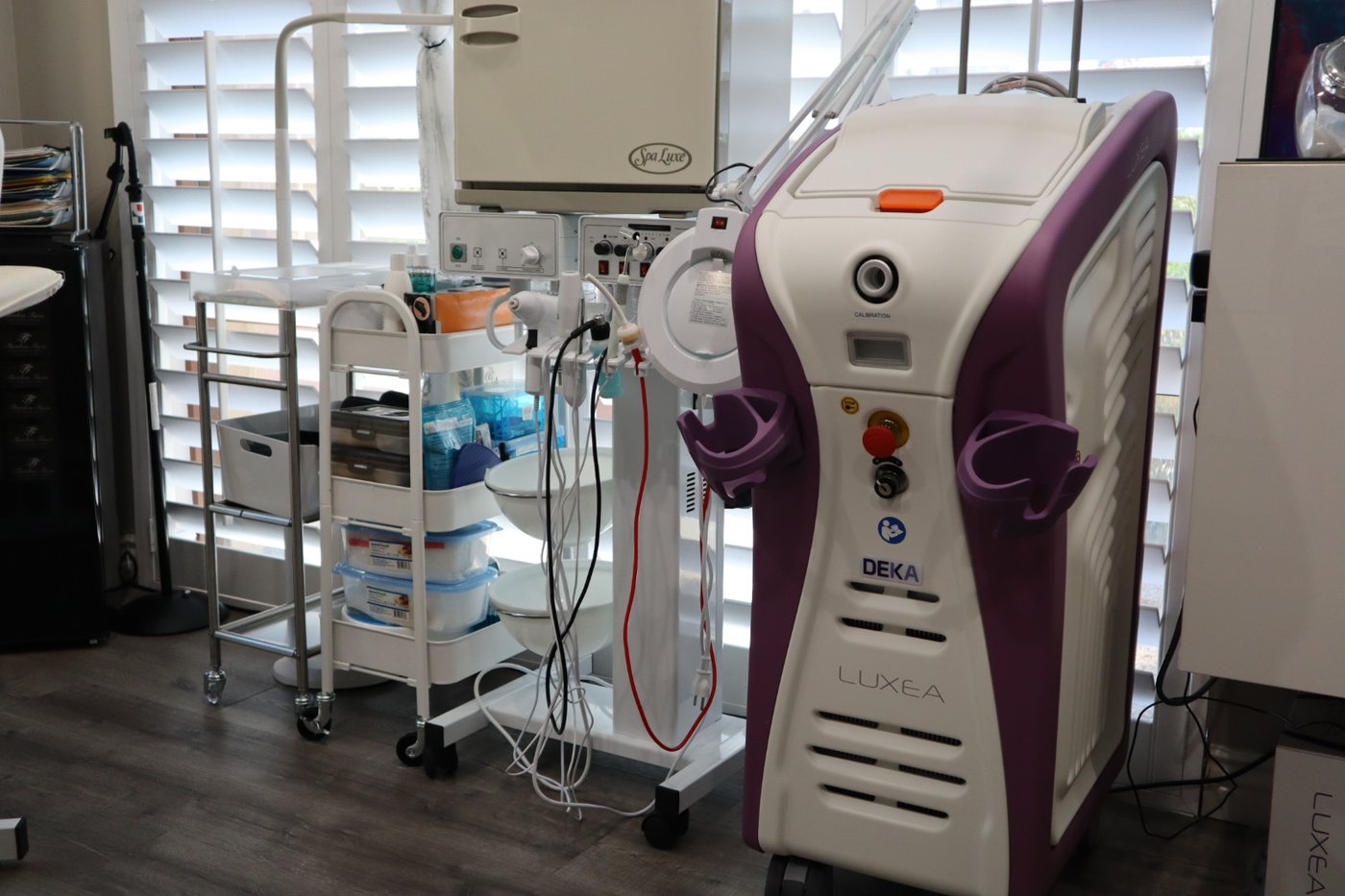
The Tetra CO2 laser by DEKA — Italy's global leader in aesthetic technology — is the only platform that can perform a CoolPeel treatment. Only Tetra controls its output finely enough to deliver high energy in extremely short pulses, producing meaningful superficial resurfacing without the lingering heat that damages surrounding skin in traditional CO2. The absence of unnecessary heat is why it's called 'cool' — and how you get the aesthetic effect with minimal downtime.
Types of laser resurfacing.
CO2: treats wrinkles, scars, warts, enlarged oil glands — newest fractional CO2 technique uses ultra-pulse light in a scanning pattern to remove thin layers with minimal heat. Up to 2 weeks recovery. · Erbium: superficial to moderate lines on face, hands, neck, chest — surrounding tissue isn't burned, fewer side effects, often a 1-week recovery. Better for darker skin tones. · Pulse-dye (vascular): treats redness, rosacea, broken capillaries, hyperpigmentation. · Fractional: only treats a fraction of the skin in the area at a time — less downtime, available in ablative and non-ablative. · IPL: not technically a laser — uses targeted light energy for scars, sun damage, stretch marks, acne, rosacea, birthmarks, and pigmentation.
Are you a good candidate?.
Laser skin resurfacing is suitable if you have fine lines or wrinkles around your eyes, mouth, or forehead, shallow acne scars, or non-responsive skin after a facelift. You may not be a good candidate if you have active acne, deeply pigmented skin (risk of post-treatment hyperpigmentation that may need a bleaching agent to mitigate), deep creases, or excessive sagging skin. Laser resurfacing isn't recommended for stretch marks. Dani will work through this with you in a consult before treatment.
How to prepare for your treatment.
We'll send you a written prep sheet, but the short version: avoid tanning and excess sun for 4 weeks before treatment — use a broad-spectrum SPF daily. Avoid deep facial peels, dermabrasion, or laser resurfacing for 4 weeks beforehand. Skip photosensitive medications (doxycycline, minocycline) for 72 hours before. If you have a history of oral cold sores or shingles in the treatment area, tell us — we'll start you on valacyclovir or acyclovir 2 days before and continue for 3 days after. You may be asked to apply a topical retinoid for 4 weeks before to prime the skin.
What are the risks.
Skin resurfacing improves your skin's appearance but no procedure is risk-free. Potential complications include: burns or other heat-related injuries, visible scarring, pigment changes (darker or lighter areas), reactivation of herpes cold sores, and bacterial contamination. During healing, small white bumps (milia) can appear in the treated area — these are easily treatable. Every patient gets a thorough consult to weigh benefit against risk before we proceed.
Best use cases.
- Fine lines or wrinkles around eyes, mouth, forehead
- Shallow acne scars
- Non-responsive skin after facelift
- Active acne
- Extremely dark skin (risk of hyperpigmentation)
- Deep creases
- Excessive sagging skin
- Stretch marks
Common questions.
Not sure where to start?
Tell us what you're curious about. Ali or Dani will get back to you personally — no forms-into-the-void, no pressure.