Not much — and a lot less than you’re bracing for. Filler goes in with two layers of numbing: a topical anesthetic on the skin first, and lidocaine that’s already built into the gel itself, so each small injection carries its own numbing with it. What most people feel is pressure and a few pinches, not pain.
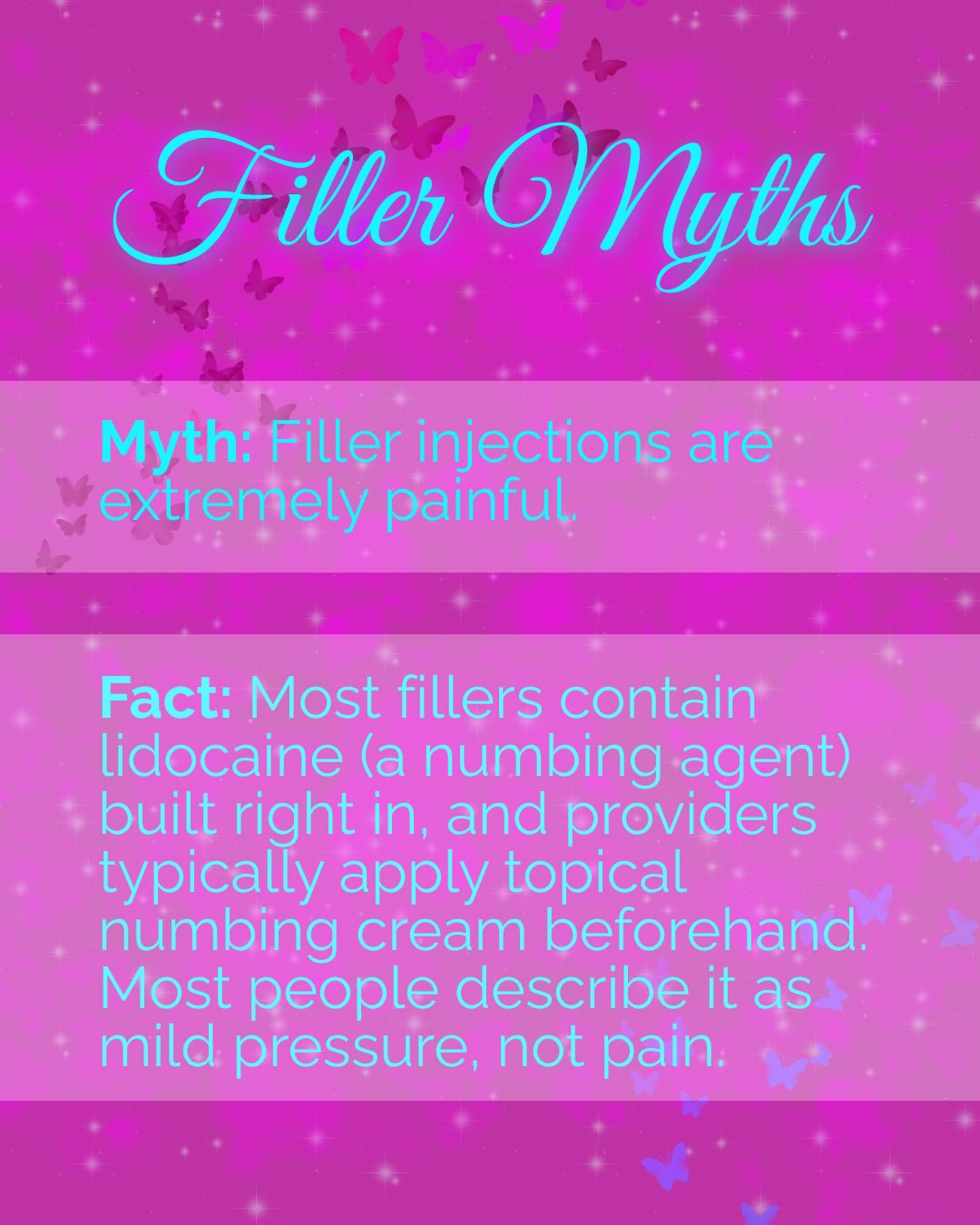
“Scared of the needle?” is the first line of a card I posted on our Instagram, because it’s the first thing a lot of first-timers say in my Chandler treatment room — usually while apologizing for saying it. Don’t apologize. It’s the most normal worry there is. Let me walk you through exactly what happens, so the fear has less to work with.
Why I posted it
Here’s how I put it on the post, and it’s what I say in the chair: Between the numbing cream AND the lidocaine already built into most fillers, pain is rarely part of the story. Just results. And the second half, which matters more to me: Book a consult and ask us anything — no judgment, just facts.
If your picture of filler is a long needle and a clenched jaw, that picture came from somewhere other than a modern treatment room. This is how it actually works.
The two layers of numbing
Layer one: numbing cream on the skin
Before anything is drawn up, a topical anesthetic goes on the area and sits while we go over the plan. Our Restylane page says it plainly: discomfort is minimal because of a topical anesthetic combined with the lidocaine in the filler itself. That sentence is doing two jobs, so here’s the second one.
Layer two: the lidocaine is already in the syringe
The Juvéderm and Restylane products I carry are hyaluronic-acid gels with lidocaine — a local anesthetic — formulated into the gel. Every small injection delivers a bit of numbing along with the product, so the area gets more comfortable as the treatment goes on, not less.
That isn’t a marketing line; it’s been tested the hard way. In a patient-blinded, split-face randomized trial published in Dermatologic Surgery, the same hyaluronic acid filler was injected with lidocaine on one side of the face and without it on the other, and patients reported significantly less injection-site pain on the lidocaine side (the trial). A 2024 systematic review and meta-analysis in Aesthetic Plastic Surgery reached the same conclusion across the trials since: lidocaine-containing fillers reduce patient-reported pain without compromising safety or effectiveness (the review).
So what does it actually feel like?
Honest answer from my side of the syringe: pressure. A pinch when the needle goes in, then a pushing, “full” feeling as the gel is placed, and then numb. The thing people brace for — sharp, sustained pain — is not what filler feels like with the two layers above doing their job. On our post I wrote that most people describe it as mild pressure, not pain, and that’s the phrase my patients hand back to me at the mirror.
What I can’t tell you is exactly how your face will feel, because sensitivity is personal. Some people chat through the whole thing. Some people need a hand to squeeze and a minute between areas. Both are fine. Both get the same care. If you read our Google reviews, you’ll notice “nervous” and “comfortable” show up in the same sentence a lot. That’s the job.
Does lip filler hurt more than cheeks?
Lips are the area I get the most “does it hurt” questions about, and they get the same two layers: cream on the lips first, lidocaine in the gel. I don’t start until the cream has had its time — on our lip appointments, numbing, injection and aftercare typically fit inside 45 minutes, and none of that is rushed.
What lips do more of is swell. That isn’t pain, but it surprises people, so read what’s realistic with lip filler before you come in: days one and two are the puffiest, week two is the real result. Bring the screenshots; we’ll map what one syringe actually does on your lips. And if the other fear is looking overdone, that one has its own answer: does filler make everyone look the same?
Before your appointment: the stuff that makes it easier
Most of what makes filler more comfortable happens before you sit down. Our pre-care instructions exist to keep bruising and swelling down, and they’re short:
- No alcohol for 24 hours before, and drink plenty of water.
- Skip blood thinners when you can — aspirin, ibuprofen, naproxen — and tell me about fish oil, flaxseed, ginkgo, CoQ10 or vitamin E. If a doctor prescribed a blood thinner, you stop it only with their say-so, never on your own.
- Pause retinol two days before and two days after.
- Book at least two weeks ahead of anything you want to look settled for. Bruising and swelling need time.
- History of cold sores? Ask your primary care provider about an antiviral first.
- Pregnant or breastfeeding? Injectables wait. Tell us before you book.
Bring your medication list and any allergies to the consult, too. Boring, I know — it’s also the difference between a small bruise and a big one.
After: what the next few days feel like
Once the numbing wears off, expect some tenderness, swelling and maybe a bruise at the injection points. Our post-injectables care page puts that at under five days for most people, up to fourteen for some. Ice gently and briefly, no makeup for six hours, no workouts for a day or two, don’t rub or massage the area, and don’t fly within 48 hours. Results show immediately and settle over two to four weeks as the swelling leaves. Individual results and recovery vary, and that’s the honest version.
Your questions, answered
Does lip filler hurt?
Less than most people expect. Lips get a topical numbing cream first, and the Juvéderm and Restylane gels I use carry lidocaine — a local anesthetic — inside the syringe, so each injection numbs as it goes. What patients describe is pressure and a pinch, not sharp pain, though sensitivity is personal. The bigger surprise with lips is swelling in the first two days, which settles by week two.
Do you use numbing cream before filler?
Yes. A topical anesthetic goes on before any injection and gets time to work, and the filler itself contains lidocaine — our Restylane page describes discomfort as minimal for exactly that combination. If you’re especially sensitive or anxious, say so at the consult and we’ll plan more time and go slower.
What if I’m nervous or scared of needles?
Tell me — it’s the most common thing I hear, and it changes how I run the appointment, not whether you can have it. We start with a consultation, you sign off on a written plan before anything is injected, and on the day you can pause, ask anything and take a breath between areas. No judgment, just facts.
The bottom line
Filler isn’t nothing — you’ll feel pressure and a pinch — but with numbing cream on the skin and lidocaine in the syringe, pain is rarely part of the story. That’s the standard at the Flawless Faces med spa in Ocotillo, Chandler on Alma School Rd, whether you’re five minutes away or driving in from across Chandler.
Still scared of the needle? Let me change your mind in person. Book a consult — the first appointment is a conversation, and the conversation is where the fear usually ends.